
Your denture has started shifting, and your mouth feels sticky or dry. Before committing to the cost of a new denture, you want to know what has changed and which problem needs attention.
Dry mouth can affect the suction that holds an acrylic denture against your gums, but a loose denture also needs its fit checked. Ask about both before deciding on replacement. Clear Choice Dental’s new-patient guidance asks you to bring your medicines, which can help you discuss possible causes of dryness.
Summary of the content
- Dryness and a change in denture fit deserve separate attention at the same appointment.
- Some medicines can contribute to dry mouth. Keep taking prescribed medicines and speak to your doctor before making changes.
- An adjustment, relining or a new denture may be discussed after assessment; movement alone doesn’t choose between them.
- Bring your denture, medicine details and a short note about when the trouble began.
How can dry mouth make an acrylic denture feel loose?
Saliva helps form the suction between the gum tissue and the acrylic base of a denture. Victoria’s Better Health Channel dry-mouth guidance, reviewed in September 2025, lists loose acrylic dentures among possible symptoms of dryness.
The word acrylic matters. This explanation concerns the plastic base resting against the gums; it isn’t a diagnosis for every denture or attachment. Better Health Channel’s separate denture guidance describes partial dentures that also use clasps on remaining teeth. Tell the dentist which appliance you have rather than assuming every kind stays in place in the same way.
Other dry-mouth symptoms include thick or stringy saliva, a rough tongue, cheeks or lips that feel sticky against the gums, and difficulty managing dry food. Mention those details even if the denture moving is your main concern. An account of what you notice is more useful than arriving with a diagnosis you’ve had to make yourself.
What should I check before agreeing to replace it?
Ask for the dryness, the denture fit and the condition of your mouth to be considered before choosing treatment. Better Health Channel’s denture guidance, reviewed in August 2026, explains that dentures may need relining or replacement as the gums change. Its dry-mouth guidance describes a separate assessment of symptoms, medicines and medical history.
- Explain what has changed. Is the movement new, or has the denture gradually become harder to manage? Mention rubbing, soreness and difficulties eating as well as dryness.
- Say when the denture was made and whether teeth were removed around that time. The history is particularly relevant to an immediate denture fitted when teeth were taken out.
- Bring your medicine information. Ask whether the dryness needs a discussion with your prescribing doctor as well as the dental assessment.
- Ask what the examination shows about the current fit. Does the dentist recommend an adjustment, relining, replacement, or further assessment before deciding?
- Ask what each proposed option addresses, what its limitations are and what it costs. Request an explanation of the dryness plan separately from the denture work.
These are questions to take to your appointment, not a test for choosing treatment at home. If you’re worried about paying for work that may not address your concern, say that plainly: “I’d like to understand what you found before I decide about a new denture.”
Could my medicines be contributing?
Yes, medicines are one possible cause of dry mouth, but they aren’t the only one. Better Health Channel also identifies dehydration, some medical conditions and mouth breathing among possible contributors. Noticing symptoms after a medicine change is something to report, not proof that the medicine is responsible.
Bring the names of the medicines you take and explain any recent changes. If you don’t know a name, bring the packaging or your current list rather than guessing. Ask your prescribing doctor whether a medicine review is needed; the dental appointment can include discussing your symptoms and medical history.
“Do not stop taking your medicine without speaking to your doctor.”
Better Health Channel, Dry mouth, “Self-care suggestions for dry mouth”, reviewed 9 September 2025.
The same source says a prescribing doctor may sometimes change a medicine or its dose, but may not be able to do so. Keep taking your prescribed medicines while seeking advice. This article doesn’t recommend a substitute, a dose change or a particular pharmacy product.
When might relining come up instead of a new denture?
Relining may be considered when changes in the gums affect how a denture fits; replacement is another possibility, not the automatic next step. Better Health Channel explains that dentures can need either approach over time and that the dental practitioner recommends options for the person’s circumstances.
If your denture was fitted straight after teeth were removed, tell the dentist. The same guidance describes how changes in the bone during healing can leave an immediate denture loose, so adjustments or relining may be needed. More substantial gum and bone shrinkage may mean remaking it. Your recent treatment history belongs in that discussion.
Ask the dentist to explain the finding in relation to your existing denture: “What makes relining worth considering here, or what makes a new denture necessary?” You don’t have to choose between unfamiliar treatment names before the examination. The purpose of the visit is to understand which options are relevant to you.
Do Australian sources agree about denture care?
They agree on removing dentures for sleep and keeping them clean, but their storage instructions differ. That difference is worth asking about rather than quietly combining instructions from several websites.
| Published guidance | What to discuss for your denture |
|---|---|
| Better Health Channel: dry mouth, reviewed September 2025 | Considers symptoms, medical history and medicines. Ask how the dryness will be assessed alongside the fit. |
| Better Health Channel: dentures, reviewed August 2026 | Advises removing dentures at night and keeping cleaned dentures in a clean, dry container. Ask whether that storage advice suits yours. |
| Queensland Government: dentures, updated March 2022 | Also recommends removing dentures for sleep, but says to keep them in water when not wearing them. Ask your dentist which instructions apply to your appliance. |
The Queensland Government denture page notes that different types of dentures need advice from the dentist or dental prosthetist. Bring your existing care instructions if you have them. A useful question is: “Should this particular denture be stored dry or in water, and which cleaner should I use?”
Neither page establishes an individual care plan for your appliance. In particular, don’t turn this comparison into a new soaking recipe. Ask the treating practitioner to clarify anything that conflicts with the instructions you were given.
What can I do about dryness while arranging the appointment?
Better Health Channel recommends discussing dry-mouth care with your doctor and dentist, including products that moisten the mouth and a review of possible causes. Water, avoiding sugary drinks and limiting substances that irritate dryness are among its general suggestions. Ask what is appropriate if you already have medical instructions about fluids or food.
Saliva-replacement products come in different forms, and Better Health Channel advises asking the dentist for recommendations and using prescribed substitutes as directed. You don’t need to arrive having bought a particular gel or spray. Tell the dentist what you’ve already tried and what you noticed, including any product you use to hold the denture in place.
Denture adhesive may be recommended for some people with dry mouth, according to that guidance. Ask whether it is appropriate for your denture rather than assuming more adhesive is the next step. The denture guidance also says to return for pain or a poorly fitting appliance, so don’t let a product purchase replace that assessment.
What if I still have some natural teeth?
Your remaining teeth need attention as well as the denture. Better Health Channel explains that dry mouth increases tooth-decay risk, and that healthy remaining teeth and gums help support a partial denture. Mention tenderness or a loose natural tooth rather than reporting only the appliance movement.
Ask about fluoride toothpaste for your own teeth and a separate cleaner for the denture. Better Health Channel advises fluoride toothpaste for natural teeth, but says ordinary toothpaste can scratch dentures. It also warns against hot water for denture cleaning because heat can change the denture’s shape and fit.
Keep the instructions for those two jobs distinct. “Which product goes on my teeth, and which goes on the denture?” is a reasonable question, especially if you have been using one product for everything.
When should I contact a dental practitioner?
Contact a dental practitioner about pain, a denture that doesn’t fit or feels uncomfortable, bleeding gums, swelling or a sore in the mouth. These are among the problems listed in Better Health Channel’s denture guidance; it also specifically includes ulcers lasting more than two weeks.
If eating causes the denture to press on the gums and create a sore spot, that guidance recommends returning to the dental clinic as soon as possible for adjustment. Explain the symptoms when you call so the team knows you’re asking about a current problem, not simply requesting a replacement quote.
What can I expect at Clear Choice Dental Yokine?
Our Yokine check-up and clean page describes recording your medical history, checking your teeth and examining other areas of the mouth, including the gums. It also includes dry-mouth concerns. Let reception know you wear a denture and want its movement discussed alongside the dryness.
Our published new-patient guidance asks you to arrive 15 minutes before your appointment and bring the medicines you take. Bring your private health fund card if you have one. Confirm the appointment type when booking; these instructions don’t mean that denture work will be completed at that first visit.
Your appointment checklist
- Bring the denture you are concerned about and any written care instructions.
- Note when the dryness and movement began, and whether they started together.
- Bring your medicines or an up-to-date list, including recent changes to discuss.
- Tell the dentist about pain, sore areas, eating difficulties and any remaining teeth that feel loose.
- Have the approximate date the denture was made and details of recent tooth removal, if relevant.
- Write down your questions about the fit, dryness care, storage instructions and proposed costs.
What should I ask about cost or other options?
Ask for the assessment fee and an estimate for any proposed denture work separately. You can also ask whether recommended products cost extra and request the dental item numbers to discuss with your health fund. No assessment price or fund benefit is quoted here.
Clear Choice also lists implant-retained dentures in Yokine. Our existing article about implant-supported and implant-retained dentures explains those terms. Those are separate treatment discussions, not the starting assumption for a loose denture. Begin with the findings about your current appliance and mouth.
Booking a denture and dry-mouth assessment in Yokine
Clear Choice Dental Yokine is at 17/162 Wanneroo Road, Yokine WA 6060. The contact page lists Wednesday opening until 7 pm and Saturday opening from 8 am to 1 pm; ask about current availability.
Call (08) 9345 0455. You could say: “My mouth feels dry and my denture is moving. I’d like both checked before I decide whether it needs replacing.” Mention any pain or trouble eating at the start of the call.
Written by Dr. Sandeep Sharma, Principal Dentist, Clear Choice Dental.
Sources
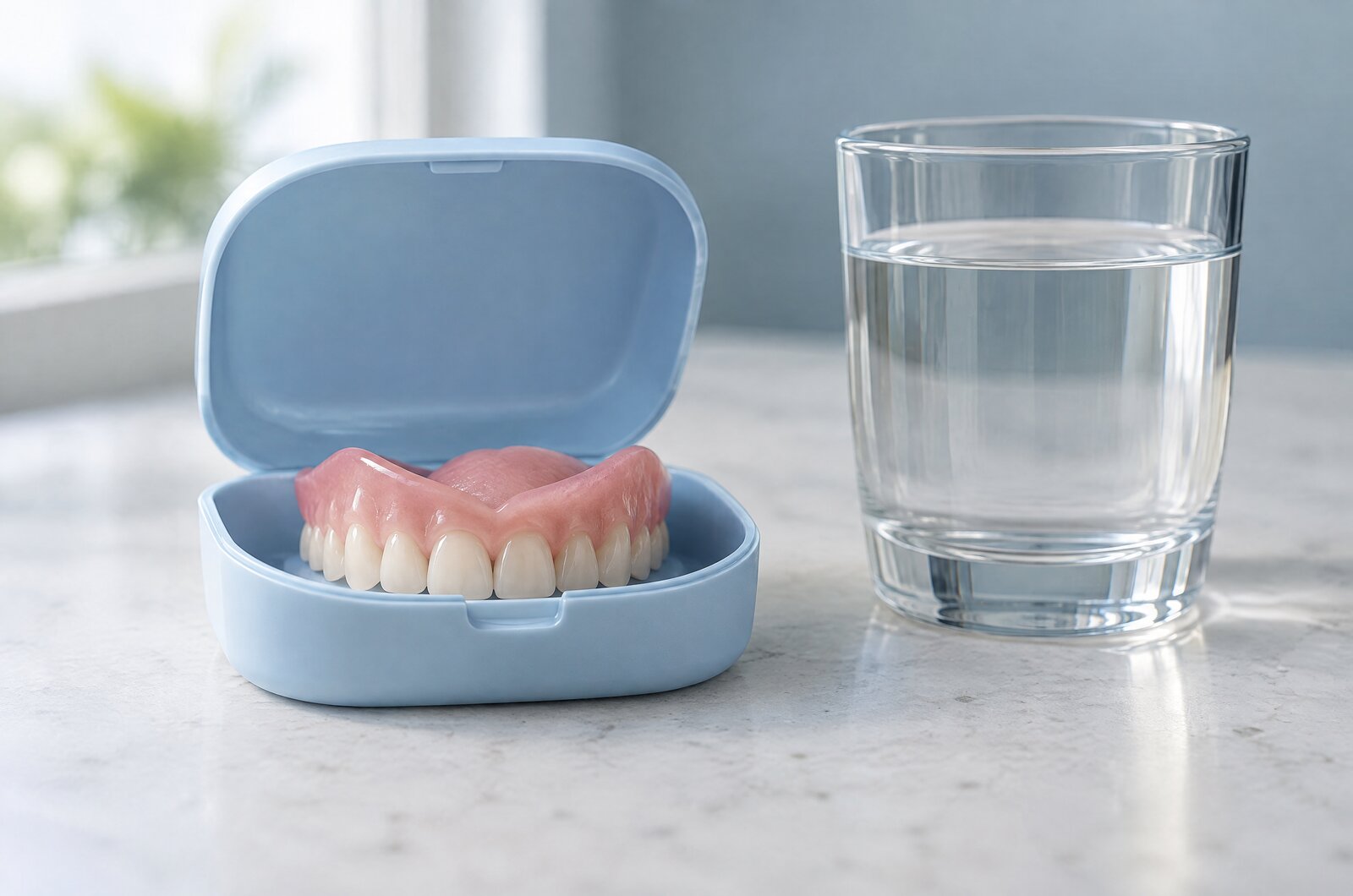
Photos in this article are AI-generated illustrations, not photos of Clear Choice Dental, its staff or patients. The denture and water are illustrative, not cleaning or storage instructions.
Sources checked 3 November 2026. This article explains general published guidance and the clinic’s published information, not an individual diagnosis, medicine change or denture treatment plan.
- Better Health Channel: Dry mouth, reviewed 9 September 2025, and Dentures, reviewed 4 August 2026. Reference: www.betterhealth.vic.gov.au.
- Queensland Government: Dentures, updated 16 March 2022.
- Clear Choice Dental: new-patient information, Yokine check-up, denture service, related article, dentist profile and contact pages linked above.