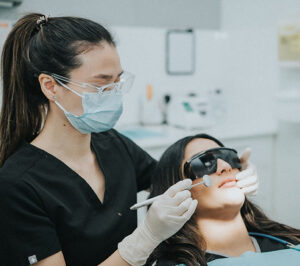

Bad breath that keeps coming back or lasts through the day often starts in the mouth. Bacteria on the tongue and around the teeth and gums can release smelly sulphur compounds as they break down debris. A coated tongue, gum disease, tooth decay and dry mouth are all possibilities. If the smell persists despite your usual care, book a dental assessment so the cause can be checked.
Breath that smells stronger when you first wake up is common. Your mouth makes less saliva overnight, so it does less to wash away debris and bacteria. Morning breath often settles after a drink of water or after you clean your teeth. Breath that continues into the afternoon, returns soon after cleaning or comes with a sore gum, toothache or persistent bad taste is worth mentioning to a dentist.
Common causes of persistent bad breath
Tongue coating and plaque
The back of the tongue can hold a coating that gives bacteria a place to collect. Bacteria can also build up in plaque, the sticky layer that forms along the gumline and between teeth. Food left in the mouth can add to the smell as bacteria break it down. If your breath improves briefly after brushing but returns, tell your dentist what you already do to clean between your teeth and whether there is one spot where food often gets stuck.
Gum disease, tooth decay and infection
Swollen, tender or bleeding gums can point to inflammation from plaque. With periodontitis, spaces can form around the teeth where plaque can be difficult to reach with a toothbrush. Decay or an infection around a tooth can also contribute to an unpleasant taste or smell. Tell your dentist if you have pain when biting, swelling or a bad taste that seems to come from the same area. An examination helps establish which finding needs attention.
Dry mouth, medicines and mouth breathing
Saliva helps clear food and bacteria from your mouth. If your mouth feels sticky, your saliva seems thick or you often wake with a dry mouth, tell your dentist. Drinking too little water, snoring and sleeping with your mouth open may contribute. Dryness can also be associated with some medicines, diabetes or problems with the glands that make saliva. If you noticed a change after starting a medicine or changing a dose, bring the name and dose to your appointment. Ask your GP or pharmacist about the timing before changing how you take it.
Dentures, braces and other appliances
Food and bacteria can collect on dentures or around braces and other appliances that are difficult to clean. If you wear a removable appliance, bring it to the visit and tell the dentist if it feels loose, rubs or is hard to clean. Ask how to care for that particular appliance. A denture that traps food or a spot you cannot reach around braces gives your dentist a specific area to check.
Food, alcohol, smoking and vaping
Garlic, onions and other strongly flavoured foods can leave an odour for a while. Alcohol and tobacco can contribute to dry mouth, and smoking also raises the risk of gum disease. Vaping may contribute to bad breath. Notice whether the smell follows meals, drinks or smoking, and how long it lasts. A breath mint may change the smell briefly. If the problem keeps returning on days when you have avoided those triggers, raise it at your dental visit.
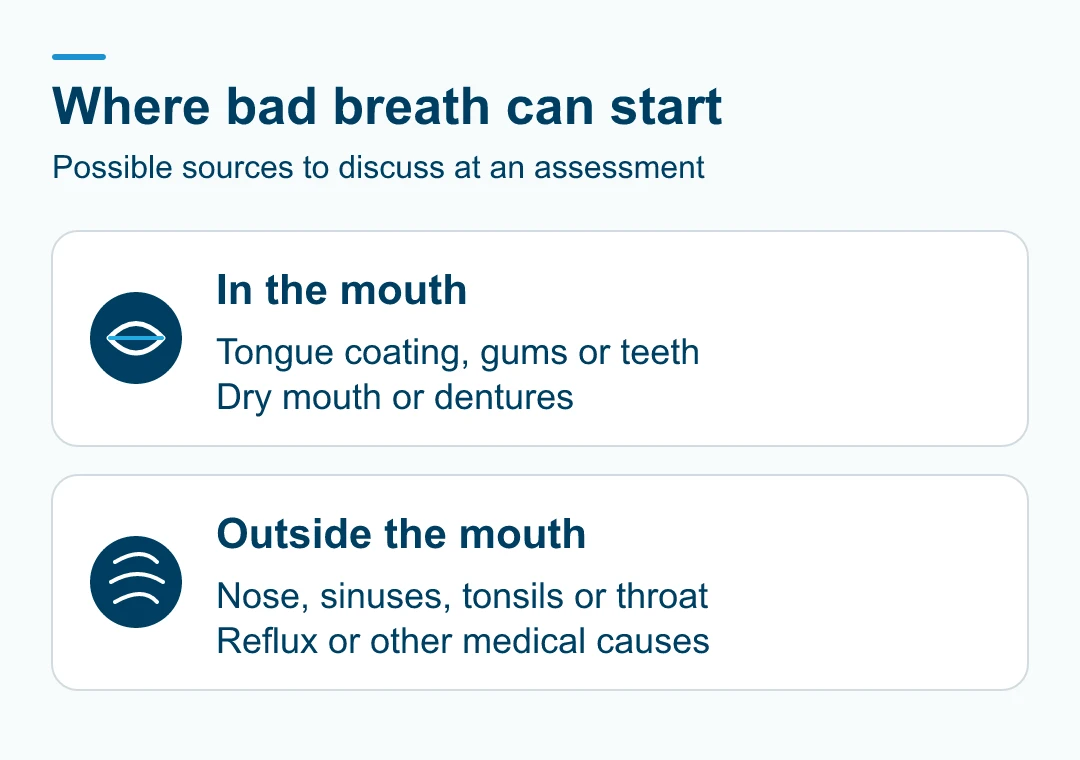
Nose, throat and other medical causes
A blocked or runny nose, mucus draining into the throat or frequent throat clearing can give your dentist clues about a possible sinus problem. Tonsil stones and throat infections can also cause bad breath. Mention a persistent sore throat or the feeling that something is stuck at the back of your throat. A GP can assess those symptoms, particularly if they continue or make swallowing uncomfortable.
Reflux can contribute to bad breath, especially when you also notice recurring heartburn or a sour taste. Less commonly, an underlying condition such as a metabolic disorder, kidney disease or some cancers can be associated with a change in breath. The smell alone cannot identify one of these conditions. Tell your dentist or GP about any other symptoms and any condition already being treated. For a child with persistent one-sided nasal discharge, a GP can assess for a nasal cause such as something lodged in the nostril.
What a dentist checks at a bad-breath appointment
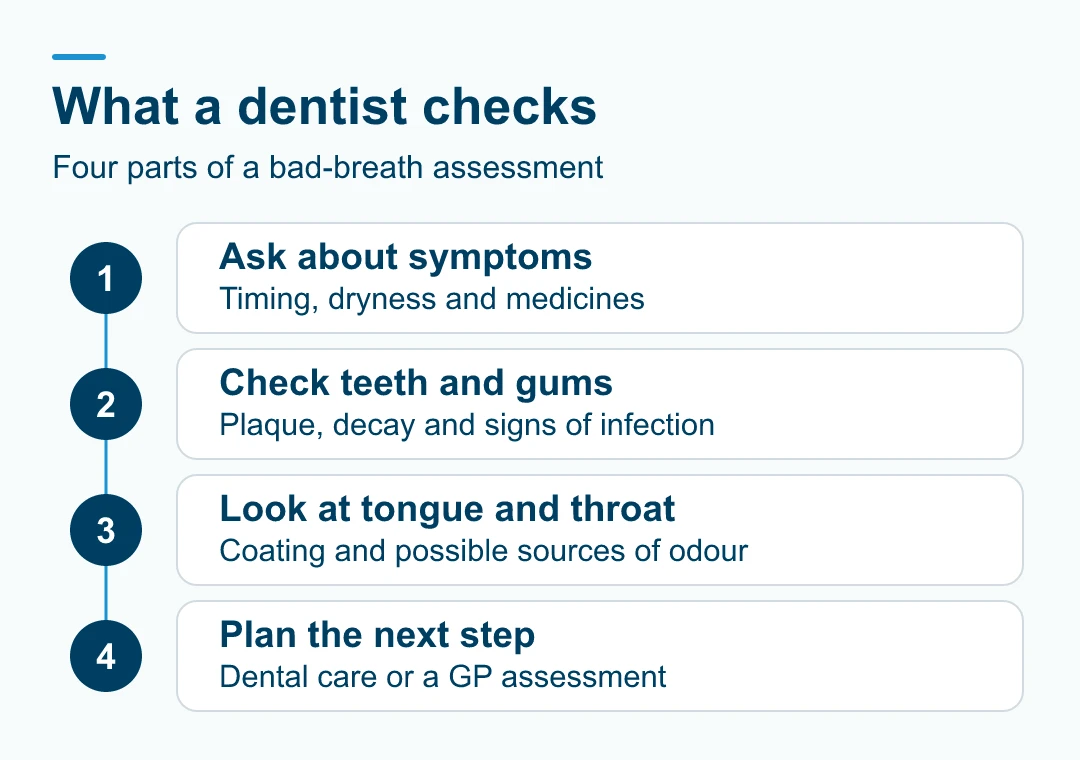
- When it happens. Your dentist may ask when it began, whether it is worse on waking or lasts through the day, and whether anyone close to you has noticed it. Mention a dry mouth, changes in taste, bleeding, tooth pain, snoring or nose and throat symptoms. Bring a current medicines list and describe what you have already tried, including mouthwash or tongue cleaning.
- Teeth and gums. The dentist looks for plaque, areas where food collects, signs of gum disease, tooth decay and infection. Say whether you have been avoiding one side when you chew or if brushing in a particular area makes a gum bleed. Your dentist may also look at how a denture or removable appliance fits and ask how it is cleaned.
- Tongue, throat and dryness. The dentist looks at the tongue and throat and asks how often the mouth feels dry. Your dentist may compare the odour when you breathe through your mouth and when you breathe through your nose. This can help decide whether a mouth or nasal source needs further assessment.
- What to do next. The findings guide the plan. If plaque or gum disease contributes, a professional clean and a conversation about cleaning between your teeth may form part of the plan. Decay or infection needs care directed at that tooth or area. If the mouth assessment does not explain the smell, the dentist may suggest seeing your GP. Ask what was found, which step to take first and when to follow up if the symptom continues.
Home care while you arrange an assessment
Use a soft toothbrush and fluoride toothpaste twice a day. Clean between your teeth daily with floss or an interdental brush that fits the space. If your gums bleed or you find it hard to clean around a bridge, brace or crowded teeth, ask your dentist or hygienist to show you how to reach the area. Clean removable dentures regularly and ask your dentist about taking them out at night and caring for them.
If you like to clean your tongue, the Australian Dental Association advises using a soft toothbrush or tongue scraper gently. Wet the tongue or tool, then move from back to front with light pressure. Cleaning can remove some bacteria and coating. Evidence that it addresses the underlying cause of persistent halitosis is limited. Bleeding, pain or a coating that concerns you is a reason to ask a dentist to look.
Drink water throughout the day. If your mouth is dry, sugar-free gum may stimulate saliva if chewing is comfortable for you. A dentist or pharmacist can discuss a saliva substitute or which mouth rinse, if any, is appropriate. Breath mints may freshen the mouth briefly, and mints containing sugar can increase the risk of tooth decay. If brushing, water or a rinse only helps for a short time, tell your dentist how quickly the smell returns.
It can be hard to tell how your own breath smells. If you feel comfortable, ask someone you trust when they tend to notice a change. Tell your dentist what you have noticed even if no one else has mentioned it. If worries about your breath are affecting conversations, work or daily life, you can discuss that with a dentist or GP too.
Getting assessed in Yokine or elsewhere in WA
Clear Choice Dental Yokine is at 17/162 Wanneroo Road, Yokine WA 6060. Call (08) 9345 0455 or read about bad breath treatment in Yokine. When you call, say that the bad breath keeps returning and mention whether you also have pain, swelling, gum bleeding or a dry mouth.
If you live in WA and hold a current Health Care Card or Pensioner Concession Card, check Dental Health Services' general dental care eligibility. The service explains who can use public dental clinics and how to find one. When contacting a clinic, describe any other symptoms so staff can advise on the next step.
Frequently asked questions
What is the most common cause of persistent bad breath?
Persistent bad breath often starts with bacteria in the mouth, including on the tongue and around the gums. A dentist can check for factors that let bacteria build up, such as gum disease, trapped food and a dry mouth.
Why does my breath still smell after brushing?
Brushing may leave deposits between teeth, on the tongue or around a dental appliance. Dry mouth, tooth decay, gum disease and some nose or throat conditions can also contribute. See a dentist if the smell keeps returning despite regular brushing and cleaning between your teeth.
Do dentists recommend tongue scrapers?
A dentist may suggest gentle tongue cleaning if there is a coating. A soft toothbrush or a tongue scraper can remove some bacteria from the tongue. If bad breath persists, ask your dentist to check for the underlying cause.
Can a dry mouth cause bad breath even if I drink water?
Yes. Water can help with hydration, but if dryness keeps coming back, medicines, mouth breathing or a health condition could be involved. Tell your dentist when your mouth feels dry and ask your GP or pharmacist if a medicine might be contributing.
Can bad breath come from my stomach or throat?
Reflux, tonsil stones and some throat or sinus conditions can contribute. Most persistent bad breath starts in the mouth, so a dental assessment is a sensible first step. Tell the dentist about heartburn, a sore throat or ongoing nasal symptoms.
When should I see a dentist about bad breath?
Arrange an assessment if the smell keeps returning or lasts through the day, especially if you also notice bleeding gums, a toothache, dry mouth or a bad taste. If the dentist suspects a cause outside the mouth, they may suggest seeing your GP.
Clinical information: This article provides general information. A dentist or GP can assess your symptoms and advise on care for your situation.
Sources
Sources checked 26 November 2026.
- healthdirect: Halitosis and tonsil stones
- Better Health Channel: Halitosis or bad breath
- Australian Dental Association: Tongue cleaning and dry mouth
- Queensland Health: Bad breath
- Related guidance: healthdirect: Objects in the nose and Queensland Health: Braces and plates
- Dental Health Services WA: General Dental Service
- Clear Choice Dental: Yokine bad breath treatment and Dr. Sandeep Sharma, dentist